
Retinopathy
What is Diabetic Retinopathy?
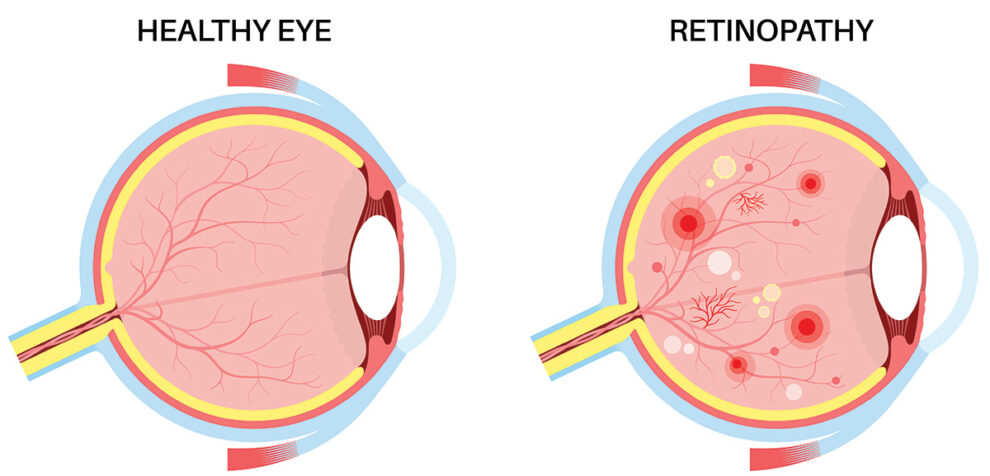
Diabetic retinopathy is a common complication of Type 1 and Type 2 diabetes, caused by long-term damage to the retinal blood vessels from high blood sugar levels. It can be non-proliferative (without new vessel growth) or proliferative (with abnormal new vessel growth). Symptoms include blurred or reduced vision, while risk factors such as smoking, high cholesterol, and high blood pressure can accelerate its progression.
Types of Retinopathy:
Proliferative retinopathy - Proliferative retinopathy is the development of new blood vessels (neovascularisation) on the inward surface of the retina or the vitreous humour (the clear gel inside the eyeball), which can threaten your vision by causing the retina to detach or blood to leak into the eye cavity. In this condition, small blood vessels grow from the surface of the retina.
Non-proliferative diabetic retinopathy - Also called preproliferative diabetic retinopathy, NPDR is the early stage of the disease, often with mild or no noticeable symptoms. It occurs when retinal blood vessels weaken and form tiny bulges known as microaneurysms, which can leak fluid and cause macular swelling. This stage is considered pre-proliferative because it can progress into proliferative retinopathy as new abnormal vessels begin to form.
Hypertensive retinopathy - High blood pressure can cause problems with blood vessels, including thickening of small arteries, vessel blockages and bleeding. As your blood pressure rises, the optic nerve may begin to swell, which affects your vision.
Symptoms of Retinopathy:
Blurry, hazy vision
Impaired colour vision
Floaters in your field of vision
Colourless and transparent strings in your field of vision
Inability to see clearly at night
Decreased vision due to patches and streaks
Permanent or partial loss of vision.
Importance of eye checks:
Diabetic retinopathy can occur if your blood sugar has become too high and remains at a high level. You may not notice until you experience decreased vision. It is important to have regular eye examinations, particularly if you have diabetes.