
Age-Related Macular Degeneration
What is Age-Related Macular Degeneration?
AMD is an age-related condition that damages the macula—the part of the retina responsible for sharp, central vision. It occurs in two forms: dry (atrophic) and wet (exudative), both causing blurred or distorted sight. While vision loss from AMD is permanent, protecting your eyes from UV rays with suitable glasses or lenses may help reduce the risk of developing the condition.
Who is at risk of AMD?
The likelihood of developing age-related macular degeneration increases with age. While the exact cause is uncertain, key risk factors include smoking, high blood pressure, being overweight, and having a family history of AMD.
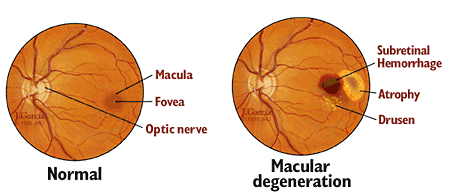
Stages of AMD:
Early stage: Early AMD is identified by some drusen (yellow spots) under the retina. This stage often goes unnoticed, as at this point most people don't experience vision loss.
Intermediate stage: This is the stage when loss of vision starts occurring, but it may not be noticeable yet. To be able to identify AMD at an early stage, regular eye examinations are recommended.
Lateral stage: A clear loss of vision is experienced at this stage.
Types of AMD:
Wet (exudative) aged macular degeneration - Also called wet senile macular degeneration, this form occurs when fragile new blood vessels grow beneath the retina from the choroid layer—a process known as choroidal neovascularisation (CNV). These vessels can leak blood or fluid, displacing the macula and blurring vision. Though less common than dry AMD, wet AMD progresses faster and causes more severe vision loss. If one eye is affected, the other is at higher risk.
Dry (atrophic) macular degeneration - Also known as dry senile macular degeneration, this form develops as the macula’s light-sensitive cells gradually deteriorate, creating a central blind spot and reducing visual clarity. It’s the most common type of AMD and progresses as yellow deposits called drusen build up beneath the retina. Over time, this leads to retinal damage and vision loss, and in some cases, dry AMD can progress to the more severe wet form.